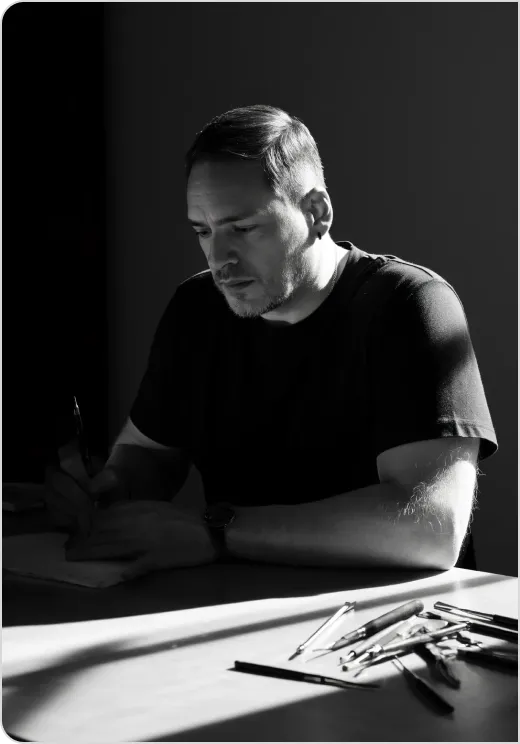
 By Antonio De Rosa, ADR Studio.
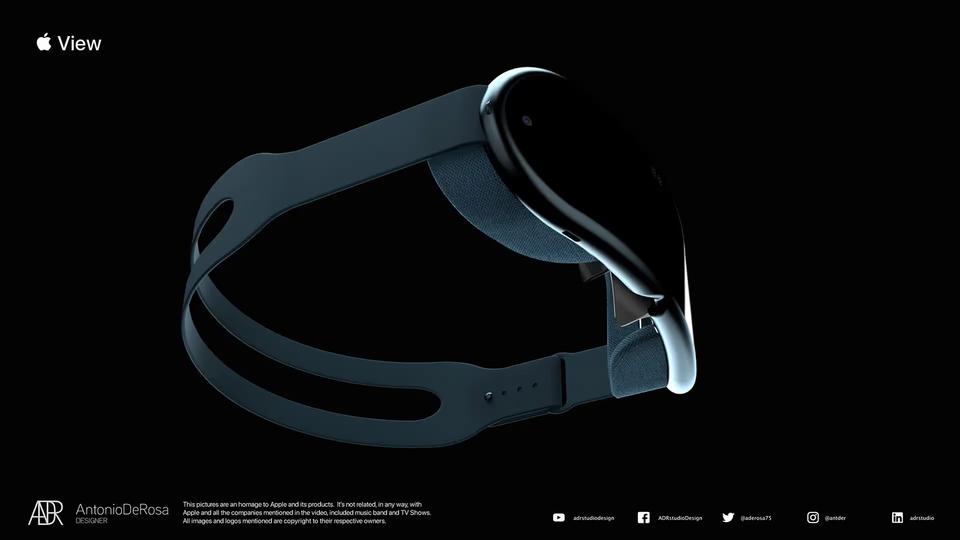
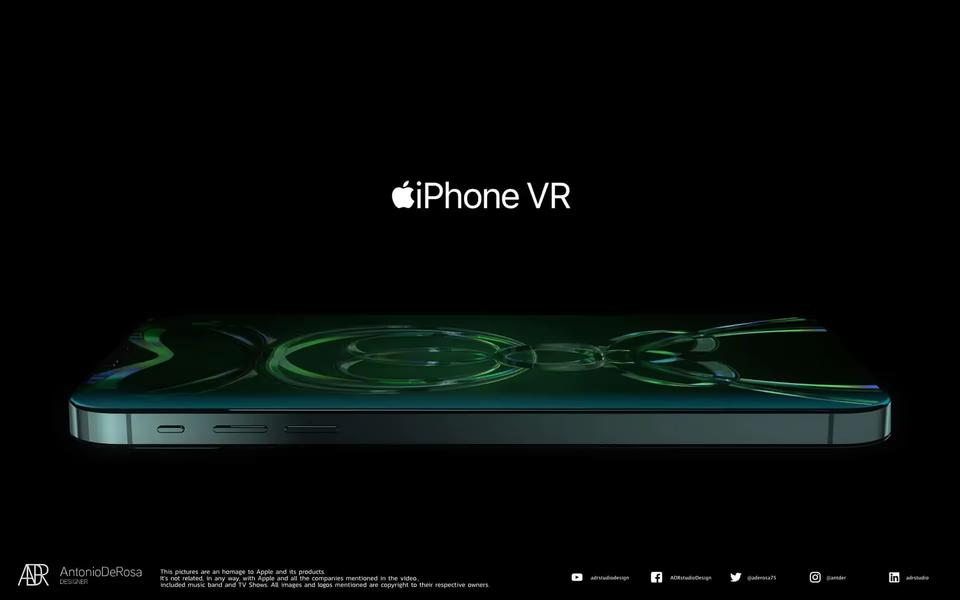
AR and VR visor design starts with the relationship between what people see, what they wear and what they control. ADR Studio’s 2022 Apple View VR Digital Crown concept brings those elements together through an ergonomic visor, a tactile interface and a cohesive visual language.
The project is a futuristic concept for an augmented and virtual reality wearable. Its central intention is clear: make immersive spatial experiences feel approachable, with intuitive controls and fluid movement between AR and VR environments.
Read as a showreel, the concept moves through four connected layers: the idea, the wearable form, the physical control and the spatial interface. Each layer gives the next a purpose. Together, they tell a design story about keeping human interaction at the centre of an immersive device.
How does AR and VR visor design start with control?
The starting point is not immersion alone. It is the question of how someone navigates an experience when that experience extends beyond a conventional screen.
Our concept places a refined Digital Crown interface within the visor design. This tactile element gives physical control a clear role alongside the spatial interface. Rather than treating the device and its interaction scheme as separate concerns, the project considers them together.
That relationship provides the organising idea for the presentation. Begin with the whole concept, then bring attention to the control. The crown is a way into the story: a small physical element that connects the wearable object to the experience it proposes.
The design direction can be understood through three questions:
- How can the visor support comfort without separating ergonomics from its overall form?
- How can a tactile control sit naturally within an immersive wearable?
- How can AR and VR feel like parts of one coherent interaction system?
What is the idea behind Apple View VR Digital Crown?
Envisioned by ADR Studio in 2022, Apple View VR Digital Crown explores a wearable that unifies augmented and virtual reality. It brings modular comfort, integrated controls and a spatial interface scheme into one concept.
The ambition is not simply to place two types of experience inside one headset. It is to consider how people might move between them without the interaction becoming fragmented. The visor, crown and interface therefore share a common brief: support easy engagement.
This is a concept study, not a claim about a released product or a commissioned Apple project. Its value lies in making a design proposition visible and open to discussion. What should an immersive wearable ask of its user, and what should its design resolve for them?
How does the wearable form carry the idea?
In a showreel-style reading, the first sustained view belongs to the visor as a whole. Before focusing on a control or interface, the form establishes that this is an object intended to be worn.
The concept combines a sleek profile with an ergonomic design direction and modular comfort. Those qualities belong in the same conversation. A wearable has to be considered in relation to the person wearing it, not only as an isolated object.
The craft question is one of coherence. The form needs to make room for interaction while maintaining a clear visual identity. Integrated controls should read as part of the device, rather than as additions competing for attention.
Comfort remains a design intention here. The supplied project description does not establish tested fit or long-term wear performance. What the concept makes visible is the priority: ergonomics is part of the proposition from the outset.
Why focus on a tactile Digital Crown?
The next layer brings attention to the physical interface. The Digital Crown gives the concept a distinct point of interaction within its wearable form.
That shift in attention matters to the story. A view of the whole visor communicates the product idea. A closer consideration of its control explains how the design approaches engagement. The object becomes more than a silhouette; it presents a way to interact.
In this concept, tactile control and immersive interaction are intended to work together. The crown does not need to stand apart from the visual language to have a clear purpose. Its refinement belongs to the same design approach as the visor.
The project description does not specify a gesture map or individual control functions. The supported idea is broader: a physical interface can form part of a human-centred approach to navigating spatial experiences.
How do AR and VR become one design story?
From the physical control, the story moves to the spatial interface. The concept proposes a cohesive scheme designed around immersive interaction and transitions between augmented and virtual reality.
This is where the parts need to make sense together. The wearable establishes the physical setting. The crown introduces tactile engagement. The interface carries that relationship into the experience.
Systems, not styles. A sophisticated visual language has a purpose when it supports a coherent way to engage. Here, the intended outcome is continuity across AR and VR, rather than two experiences that feel unrelated.
Seamless transitions are an ambition of the concept, not a measured result. The presentation can communicate that ambition by keeping the relationship between form, control and interface in focus.
What does the finished concept bring into focus?
The closing view returns to the complete wearable. After considering its layers, the visor can be read as a connected proposal rather than a collection of features.
That is the useful arc of this design story: move from the whole to the details, then return to the whole with a clearer understanding. It shows how ergonomic intent, tactile interaction and visual coherence contribute to the same idea.
The 2022 concept reflects ADR Studio’s exploration of spatial computing through a human-centred lens. It offers a starting point for discussion about future mixed reality wearables: not only what they might display, but how people might comfortably engage with them.
Key takeaways.
- Apple View VR Digital Crown is an ADR Studio concept from 2022, exploring a unified AR and VR wearable.
- The design connects an ergonomic visor, modular comfort and an integrated tactile interface.
- The refined Digital Crown gives physical control a defined role in the spatial interaction concept.
- Comfort, intuitive engagement and seamless transitions are design intentions, not verified performance results.
FAQ.
What is Apple View VR Digital Crown?
It is ADR Studio’s 2022 concept for an augmented and virtual reality visor. It combines wearable form, a refined Digital Crown interface and a cohesive approach to spatial interaction.
What role does the Digital Crown play?
The Digital Crown provides a tactile physical interface within the concept. It supports the broader intention of making immersive interaction intuitive, although specific control functions are not detailed.
Is the concept a released Apple product?
No. It is presented as a concept by ADR Studio. The project information does not establish an Apple commission, commercial release or tested product performance.