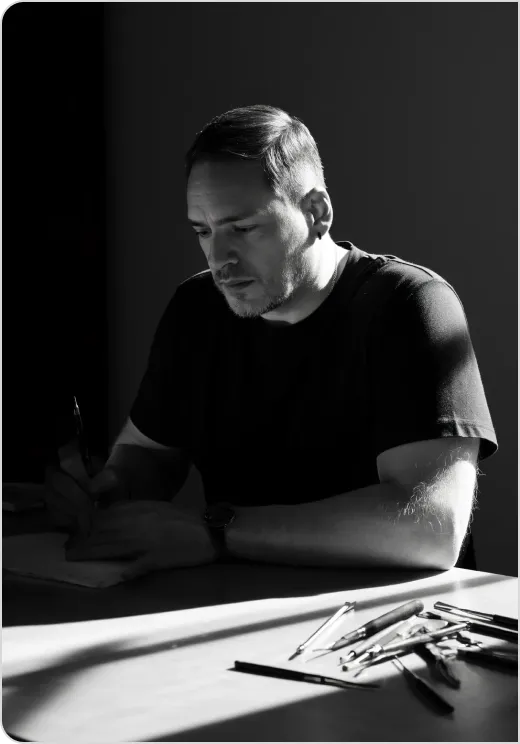
 By Antonio De Rosa, ADR Studio.
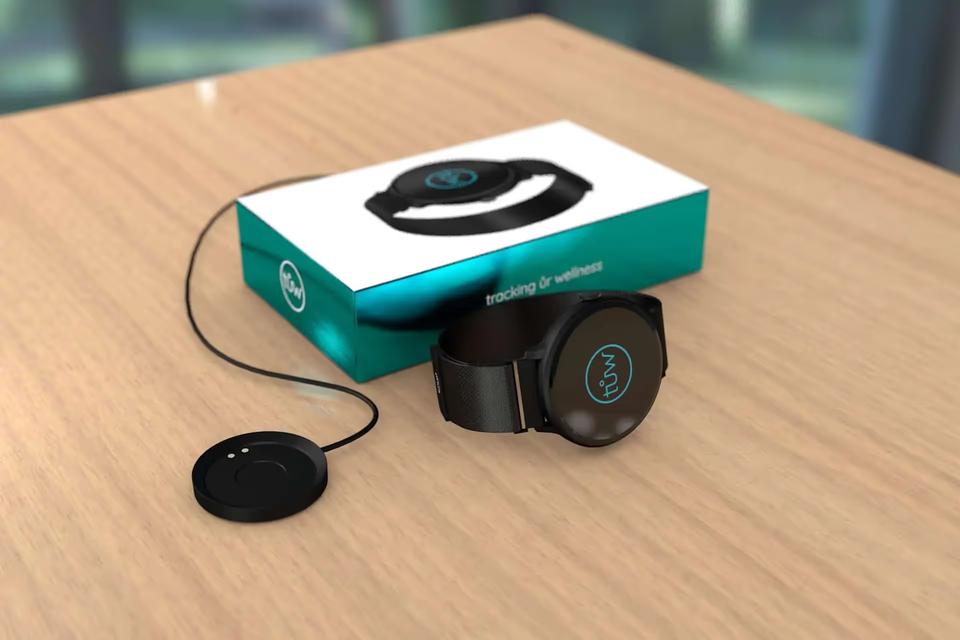
ByDzYne brand ecosystem design brought identity, marketing, 3D, video and a responsive website into one coordinated framework. Developed with ADR Studio in 2019, the project gave the brand a consistent way to tell its story across different formats.
The brief was broad, but its central question was precise: how could ByDzYne communicate through different media without losing clarity or character? Each format needed to serve its own purpose. Together, they needed to feel like parts of the same brand.
This story follows the work as a showreel-style sequence: from the organising idea to identity, then into dimensional imagery, motion, marketing and the web. It is a way to read the connected design decisions, rather than a reconstruction of undocumented production stages.
What connected the ByDzYne brand ecosystem design?
The connecting idea was a unified visual and narrative framework. ByDzYne partnered with ADR Studio to develop an ecosystem that could extend across branding, digital channels, immersive visuals and marketing materials while maintaining coherence and emotional resonance.
That meant treating the identity as more than an isolated visual asset. It needed to support communication. Marketing tools, 3D elements, video content and the website would each carry the brand into a different context, with different demands on attention and understanding.
Systems, not styles. Here, that principle meant building relationships between the outputs. A consistent identity could provide recognition, while modular design principles allowed the expression to adapt. The aim was not to make every format identical. It was to make each one belong.
Where does a connected brand system begin?
In this project, the starting point was the brief’s shared requirement: clarity across a wide range of media. Before considering the finished ecosystem, it helps to look at the roles its parts needed to perform.
- Visual identity: establish a refined, consistent expression of the brand.
- Marketing tools: support communication across varied formats.
- 3D assets: add an immersive dimension to the visual language.
- Video content: carry the brand’s story through motion.
- Responsive website: bring the system into a user-centred digital presence.
These were not separate creative directions. They were connected responsibilities within one brief. The design challenge was to give each area enough flexibility to work on its own, while keeping its relationship to the whole visible.
For a making-of view, this is the first meaningful frame: not a finished asset, but a clear account of what the system must do. Everything starts from a dot. Here, that dot was a shared purpose across the work.
How did the identity support different formats?
The project developed a flexible, consistent identity supported by modular design principles and purpose-driven graphics. These provided a common foundation for communicating ByDzYne’s values and positioning across the ecosystem.
Modularity matters because a brand encounters different conditions in different media. A marketing asset has a particular communication task. A website must support use as well as expression. Motion introduces sequence and duration. A shared system needs to accommodate those differences without becoming fragmented.
The craft sits in that balance. Consistency gives the work continuity. Flexibility gives it room to respond. In the ByDzYne project, the identity and supporting media assets were developed around both requirements, rather than asking a single fixed expression to do every job.
Read as a showreel, this is where the organising idea becomes a wider visual language. The focus shifts from an individual output to the relationships that allow the brand to move between formats.
What did 3D and motion add to the story?
The ecosystem included immersive 3D visuals and engaging video content. These expanded the brand’s expression beyond static identity and marketing materials, creating additional ways to support storytelling and visual impact.
In a showreel-style presentation, the transition into 3D changes how the work is read. Attention moves towards dimension and spatial presence. The transition into video adds time: content can unfold rather than appear all at once.
Those are different expressive possibilities, but the project’s requirement remained the same. The assets needed to communicate ByDzYne’s positioning within a coherent framework. Immersion and movement had a purpose beyond visual variety.
This is also where the distinction between an asset collection and a brand ecosystem becomes clear. The 3D and video work belonged to the same communication effort as the identity. Their role was to extend the story, not introduce an unrelated one.
How did the system reach marketing and the web?
Bespoke marketing tools translated the brand framework into materials for communication. Their value within the project came from combining versatility with consistency: different formats could support different messages while retaining a shared visual and narrative direction.
The responsive website brought that framework into a user-centred digital setting. It was part of the coordinated ecosystem, alongside the identity, 3D assets and video content. The brief therefore connected digital presence with the broader brand experience.
These applications give the showreel its practical closing sequence. The work moves from the organising system into the places where communication happens. Identity, imagery and content are no longer viewed only as individual creative outputs. They are understood through their roles.
The completed ecosystem gave ByDzYne a cohesive brand experience, supporting clearer communication and a stronger presence across strategic touchpoints. These are qualitative outcomes described by the project, not measured performance claims. The central achievement was alignment across the work.
Key takeaways.
- ByDzYne and ADR Studio developed a coordinated brand ecosystem in 2019, spanning identity, marketing, 3D, video and a responsive website.
- A unified visual and narrative framework connected the different media without requiring them to behave identically.
- Modular design principles supported a flexible identity and adaptable communication assets.
- The finished work aligned brand expression with storytelling, engagement and strategic communication goals.
FAQ.
What was ADR Studio’s role in the ByDzYne project?
ADR Studio partnered with ByDzYne to develop a comprehensive brand ecosystem. The scope included a cohesive identity system, bespoke marketing tools, immersive 3D assets, video content and a responsive, user-centred website.
Why combine identity, 3D, video and web design?
For ByDzYne, these formats were connected parts of the brief. Developing them within one framework helped maintain clarity and coherence while allowing each medium to contribute its own way of communicating the brand’s story.
Does this story document a sketch-to-render process?
No. The project information does not specify sketch, clay or wireframe stages. This story uses a showreel-style progression to explain the relationship between the brief, the design system and the finished ecosystem, without inventing production details.