
 By Antonio De Rosa, ADR Studio.
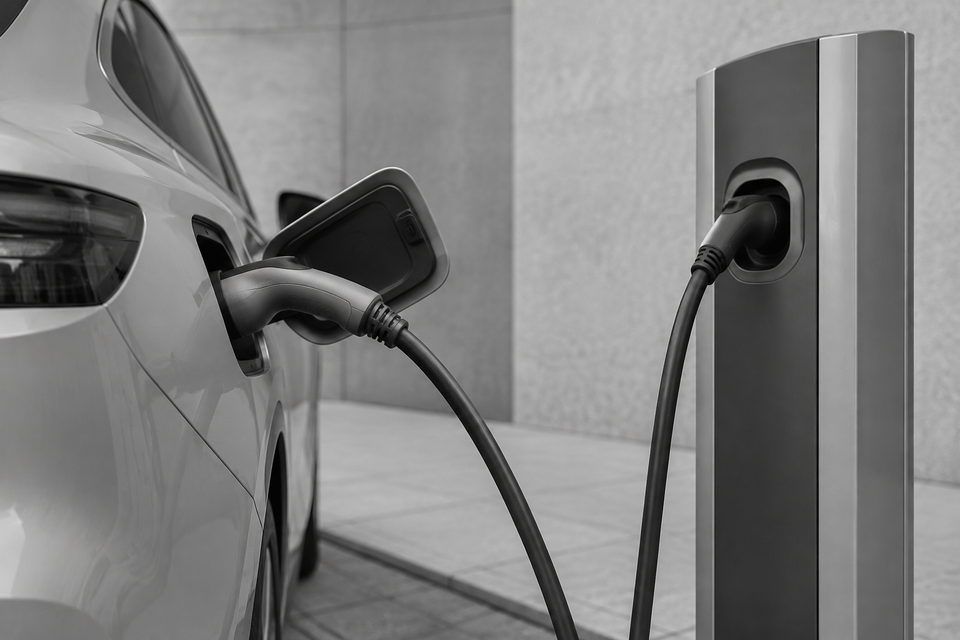
EV charging experience design shapes trust because drivers judge an electric vehicle by the whole journey, not just the car. When finding, starting and paying for a charge feels uncertain, the product promise weakens.
The industry’s move towards shared charging connections is useful progress. But a compatible plug is only one part of a dependable service. Our view at ADR Studio is simple: charging needs to be designed as part of the vehicle experience, even when several businesses deliver it.
What is changing in public EV charging?
Across North America, automakers have been moving towards the North American Charging Standard, also standardised as SAE J3400. Access to compatible networks is expanding through adapters and vehicles with native ports. Availability still depends on the vehicle, charging site and relevant commercial arrangements.
This widely reported transition addresses a visible source of friction: different cars needing different connectors. It also brings a less visible problem into focus. Physical compatibility does not automatically mean a driver can find an available charger, authenticate, understand the price and complete a session.
In markets where connector choices are already more settled, drivers can still encounter fragmented apps, payment processes and support. The lesson travels beyond any single standard. Infrastructure convergence creates an opportunity for service convergence. It does not deliver it by itself.
What should EV charging experience design include?
Start before the driver reaches the charger. A route recommendation should account for vehicle compatibility, access restrictions and the charging information available. It should also distinguish a confirmed fact from an estimate.
At the site, the driver needs a clear sequence. Which bay can this vehicle use? Is an adapter required? What will the session cost? Has charging actually started? The interface should answer these questions without sending someone through several unrelated screens.
A useful design brief covers five connected moments:
- Find: show suitable locations, access conditions and the freshness of availability data.
- Arrive: make entrances, bays and connector reach understandable.
- Start: explain authentication, payment and any required equipment.
- Monitor: show charging progress, costs and meaningful changes.
- Recover: provide a clear next action when the session fails.
This is not simply an interface checklist. It connects product design, physical space, software and customer support. A polished app cannot compensate for a cable that cannot reach the vehicle’s port.
Will a common connector make charging simple?
A common connector can reduce physical incompatibility. It cannot, alone, settle network permissions, payment methods, site access or the reliability of live information.
Automatic authentication, often discussed through Plug & Charge, tackles another layer. Where the vehicle, charger and supporting services are compatible and configured, it can reduce the steps needed to begin charging. It should not be treated as a feature that follows automatically from a particular connector.
That distinction matters in product communication. “Compatible connector”, “network access” and “automatic payment” describe different capabilities. Combining them into one broad promise leaves customers to discover the exceptions at the roadside.
Design teams should make those differences legible without teaching drivers the entire technical system. Show what works for this vehicle, at this location, with this account. Keep the underlying complexity out of the main task, but make limitations easy to find.
How should EV brands communicate charging access?
Charging access is increasingly part of the vehicle sales story. It can make ownership feel more practical. But broad coverage claims need context if they are to support an actual purchase decision.
A prospective owner needs to know whether their regular routes are supported, whether an adapter is necessary and how payment works. A large network graphic may attract attention while answering none of those questions.
We would build the communication around everyday journeys. Demonstrate an apartment resident’s weekly charging routine. Explain a motorway stop. Show what happens when a preferred site is unavailable. These scenarios turn a general promise into something a customer can evaluate.
Marketing should also distinguish current access from planned access. Keep eligibility information maintained after launch. The product page, dealer explanation, vehicle interface and support article should tell the same story. Consistency is part of the service, not just the brand identity.
Who should own the charging experience?
No single organisation controls every public charging journey. Automakers, network operators, payment providers and site owners each shape the outcome. That makes shared responsibility necessary, but it does not make unclear responsibility acceptable.
At ADR Studio, we would begin by mapping the journey across those boundaries. For every handover, identify who supplies the information, who keeps it current and who helps when it is wrong. Then test the full sequence with real vehicles and realistic constraints.
Include poor mobile reception, occupied bays, unfamiliar adapters and failed payment attempts. Test physical access, cable handling, screen readability and payment reach. The goal is not to design only for a successful demonstration. It is to make ordinary problems manageable.
Measure completed sessions alongside failed starts, payment retries and time spent seeking help. Read those measures together with driver feedback. Design drives performance when the team can connect a design decision to an observable outcome.
Where can AI support the charging journey?
AI can help interpret route preferences, explain charging options or summarise a fault. Its role should remain bounded by reliable vehicle and network data.
A confident recommendation based on stale availability can add friction rather than remove it. Show when information was updated. Label predictions as predictions. Offer an alternative when certainty is low.
The principle is the same across strategy, design and AI: systems, not styles. A conversational interface is useful only if the underlying service can support the answer.
Key takeaways.
- Shared connectors reduce one barrier. They do not resolve every charging task.
- Design the journey from route planning through payment and recovery.
- Separate connector compatibility, network access and automatic authentication in customer communication.
- Assign responsibility across partners and measure what drivers actually complete.
FAQ.
What is EV charging experience design?
It is the design of the complete charging journey. It includes finding a suitable charger, reaching the bay, connecting, paying, monitoring progress and getting help. Physical infrastructure and digital services both matter.
Does NACS compatibility guarantee network access?
No. Connector compatibility is one requirement. Access can also depend on the vehicle, adapter, charging equipment, software and network arrangements. Drivers should check the current guidance for their specific vehicle and intended network.
What should an EV brand improve first?
Start where drivers cannot complete a task or understand what happens next. Failed starts, unclear eligibility and confusing payment deserve attention before visual refinements. Then connect the fix across the vehicle, app, website and support service.