 By Antonio De Rosa, ADR Studio.
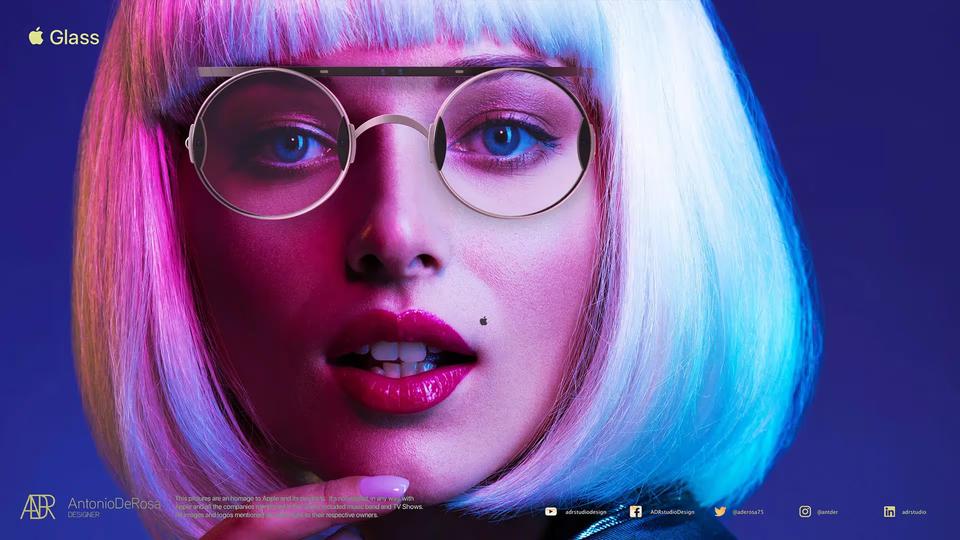
The Apple Glass eyewear concept is ADR Studio’s 2022 exploration of augmented reality glasses shaped by familiar design. Inspired by the Lunor Classic PP frames worn by Steve Jobs, it pairs classic eyewear proportions with proposed cameras, tracking and sensing capabilities. The idea: make future interaction feel natural through a recognisable form.
What was the Apple Glass eyewear concept?
This was a conceptual AR eyewear device, not a released product. We imagined how augmented reality could sit within an object already understood through everyday use: a pair of glasses. The starting point was eyewear, rather than technology given a wearable shape.
The proposal brought together six integrated cameras, eye tracking, hand and gesture recognition, bio-sensory detection and charging through an AirPods-style case. These capabilities belonged to a single design vision. They were not presented here as evidence of a working or tested device.
Looking back at the project means revisiting that relationship between ambition and familiarity. How could a device suggest new ways of interacting while retaining the visual language of something people already recognise?
Why look to classic eyewear for an AR concept?
The reference was specific: the classic Lunor Classic PP frames worn by Steve Jobs. That connection gave the concept a design heritage to work from. It also established a clear tension between an enduring eyewear form and a proposed set of advanced technological functions.
Our idea was to bring those two directions together. Classic proportions could provide aesthetic familiarity. Cameras, sensors and tracking could suggest a different relationship with digital information. Neither side needed to erase the other.
This is where the homage becomes more than a reference to an iconic wearer. It becomes a design question about continuity. When an object takes on new capabilities, what should remain familiar? For this concept, the answer began with the proportions and character of the frames.
How did the concept imagine everyday AR interaction?
The interaction proposal centred on looking, moving a hand and making a gesture. Eye tracking and hand recognition suggested ways to engage with AR through actions connected to the body. The ambition was intuitive interaction, supported by the device rather than dominated by its technical presence.
The proposed capabilities included:
- Six integrated cameras within the eyewear concept.
- Eye tracking as part of the interaction approach.
- Hand and gesture recognition to support physical input.
- Bio-sensory detection, including proposed food and calorie sensing.
- An AirPods-style charging case to support the use cycle.
These elements describe the scope of the idea. They do not establish how accurately recognition would work, how a particular interface would behave or how the glasses would perform in daily conditions. Those are separate questions. At the concept stage, the task was to give this collection of capabilities a coherent design direction.
What did food and calorie detection add to the idea?
Food and calorie detection extended the proposal beyond looking at digital content. It imagined eyewear that could also sense aspects of the wearer’s surroundings. Alongside bio-sensory detection, this broadened the role proposed for the glasses.
The distinction between intention and proof matters here. The project imagined advanced sensing; the supplied project details do not establish its accuracy, method or practical limits. We revisit it as part of the concept’s ambition, not as a verified nutritional tool.
What remains useful is the underlying design question: if eyewear can gather more information, how should that capability fit into an object intended to feel natural? Adding sensing makes clarity of purpose more important, not less.
Where was the craft in the eyewear design?
The craft lay in bringing classic proportions and modern AR technology into one refined visual language. The intended result was recognisable as eyewear while carrying a proposal for cameras, tracking and sensors. Familiarity was part of the brief, not an afterthought.
That required considering the frame as a whole rather than treating each feature as a separate visual statement. Six cameras are a technical proposition. Integrating them into an eyewear concept is a design problem about how the parts relate to the object.
Ergonomic comfort and everyday wear were also design intentions. They should not be confused with tested outcomes. A concept can express a direction for comfort through its form and proportions, but it cannot establish wearability through appearance alone. That boundary keeps the discussion grounded while leaving room for exploration.
Why include an AirPods-style charging case?
The charging case extended the concept beyond the glasses themselves. It proposed a familiar way to support a technologically ambitious object: charging through a companion case. The reference helped connect the eyewear to an already recognisable product relationship.
It also kept the design discussion focused on more than the moment of interaction. A wearable has to be considered when it is not being worn, too. Charging belongs to that wider experience.
The project does not provide charging speeds, battery life or case specifications. Its contribution here is the relationship between the two objects. The eyewear and case were parts of the same proposal, rather than separate ideas.
What still holds from this 2022 AR concept?
The lasting lesson is not that every proposed capability should appear in future eyewear. It is that new interaction can begin with familiar form. Design heritage can offer a useful starting point without becoming a limit on what an object might do.
The project also holds together through relationships: frames and cameras, eyes and gestures, glasses and case. Systems, not styles. A visual reference gives direction, but the wider experience gives the concept its purpose.
Today, we would still ask the same central question: does the technology belong to the object, or does the object merely carry it? This project explored the former. Its value as a throwback is in that intention, and in keeping a clear distinction between a future-facing idea and a demonstrated product.
Key takeaways.
- ADR Studio’s 2022 concept paired classic eyewear proportions with imagined AR capabilities.
- The Lunor Classic PP frames worn by Steve Jobs provided the design reference.
- Tracking, sensing and case-based charging formed a connected proposal.
- Comfort, natural interaction and advanced detection were ambitions, not verified results.
FAQ.
Was ADR Studio’s Apple Glass a released product?
No. The 2022 work was an augmented reality eyewear concept by ADR Studio. It expressed a vision for future wearable interaction, rather than documenting a released device or confirmed product performance.
What inspired the shape of the glasses?
The concept drew inspiration from the classic Lunor Classic PP frames worn by Steve Jobs. It aimed to combine that design heritage and familiar eyewear proportions with modern AR technology.
Which features did the concept propose?
It proposed six integrated cameras, eye tracking, hand and gesture recognition, bio-sensory detection, food and calorie detection, and charging through an AirPods-style case. These features describe the conceptual device, not a validated specification.