 By Antonio De Rosa, ADR Studio.
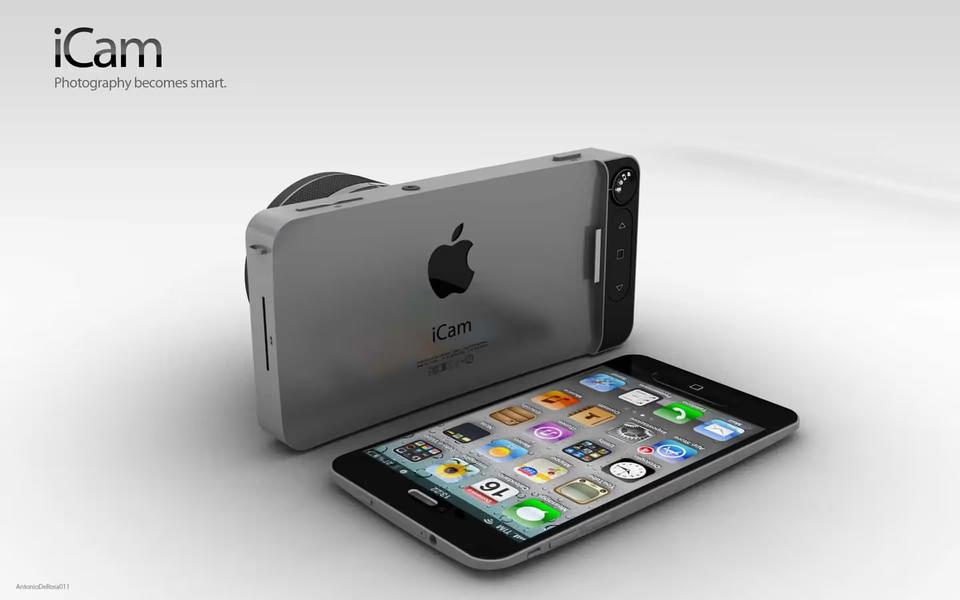
iCam 2011 is ADR Studio’s concept for personal photography hardware design, pairing a refined form with intuitive handling. It imagines digital capture as an everyday activity, shaped around simplicity, accessibility and visual clarity.
Created in 2011 for Concept by ADR Studio, the project explored a future in which taking photographs would become increasingly ubiquitous. Its subject was a camera. Its wider concern was the relationship between a person, an object and the act of capturing an image.
This is a showreel-style reading of that concept: from the question behind it, through form and interaction, to the finished design. The focus is on the thinking the concept expresses, rather than an undocumented sequence of sketches or prototypes.
What did personal photography hardware design need to address?
The brief was to reimagine personal photography hardware for a future where digital capture would feel familiar and intuitive. Before mainstream smartphone dominance, iCam 2011 anticipated advances in mobile photography and explored what that shift could mean for a dedicated imaging object.
The design question was not simply how a future camera might look. It was how that camera could make sense in everyday use. Form, handling and visual clarity needed to support the same intention.
That distinction matters. A futuristic appearance can communicate an idea quickly. A considered product concept also asks what someone needs to understand, how they approach the object and whether its shape supports its purpose. For iCam 2011, those questions centred on making photography feel approachable.
Where does the design story begin?
Everything starts from a dot. Here, that starting point was an everyday act: capturing an image. The project placed that act at the centre of the concept, with simplicity and accessibility as guiding concerns.
In a showreel-style presentation, this is the first part of the story. Before considering the finished form, establish the intention. The camera was imagined for a world where digital photography would be less exceptional and more habitual.
That intention gives the design a clear direction. A personal object should be understandable without feeling visually demanding. Its appearance and its handling should reinforce one another. The iCam concept explored that relationship through a minimalist form language and user-centred interaction ideas.
How does minimalist form support the idea?
The next part of the story is form. iCam 2011 brought together a sleek appearance, an ergonomic shape and a focus on intuitive handling. These were connected concerns, not separate layers added to a finished object.
Minimalism, in this context, is more than a visual preference. It is a way to consider what deserves attention. The relevant question is not only what can be removed, but what must remain clear for the object to communicate its purpose.
The concept’s refined appearance expresses that ambition. Its future-facing character sits alongside a practical concern for how a camera should feel to approach and hold. Neither concern needs to cancel out the other.
This is where craft enters the story. For a camera concept, shape carries both visual meaning and an expectation of use. The design has to express an idea while keeping the person using it in view.
What does intuitive handling mean in a concept?
Intuitive handling was a design aim for iCam 2011, not a measured usability result. The supplied project account describes a focus on ergonomic shape and user-centred interaction. It does not establish user testing, production performance or a validated accessibility outcome.
That boundary helps us discuss the work clearly. We can describe what the concept sought to achieve without turning its intentions into evidence of a finished commercial product.
Three concerns explain the interaction direction:
- Simplicity. Keep the central activity of taking photographs at the heart of the design.
- Accessibility. Explore an approachable relationship between the person and the camera.
- Visual clarity. Give the object a coherent appearance that supports understanding rather than competing for attention.
Together, these concerns connect the exterior to the experience being imagined. The camera is not treated only as something to look at. It is conceived as something to handle and use.
How can the design process become a visual story?
A making-of usually moves from early studies to a finished object. For iCam 2011, the documented facts support a story about design intent and resolution, without requiring us to invent sketches, clay models, wireframes or workshop milestones.
We can organise that story into three movements:
- Start with the context. Establish the prospect of digital capture becoming an ordinary part of daily life.
- Follow the design priorities. Connect minimalist form with ergonomics, simplicity and clear interaction.
- Return to the whole concept. Read the finished camera as an expression of those priorities working together.
This sequence makes the design thinking visible. It gives the finished form a reason to exist beyond appearance. It also keeps the presentation honest: the narrative comes from the project’s stated concerns, not from a reconstructed production history.
What does iCam 2011 contribute to the imaging conversation?
The concept demonstrated ADR Studio’s foresight in imagining future product categories and contributed to broader discussions about digital imaging design. Its value lies in the question it made tangible: what might personal photography hardware become as capturing images became more widespread?
That is different from claiming that the project caused later developments. iCam 2011 anticipated a direction. It offered a designed proposition within a wider conversation.
Looking back, the useful thread is the connection between changing behaviour and physical form. The concept explored how an emerging everyday activity could shape an object’s character. Its story remains grounded in that relationship: a future imagined through the camera, and a camera imagined around the person.
Key takeaways.
- iCam 2011 explored personal digital imaging before mainstream smartphone dominance.
- The concept connected minimalist form with ergonomic shape and intuitive handling.
- Simplicity, accessibility and visual clarity guided the interaction direction.
- Its contribution was conceptual foresight, not a claim of commercial performance or influence over later products.
FAQ.
What is iCam 2011?
iCam 2011 is a conceptual camera design created by ADR Studio in 2011 for Concept by ADR Studio. It imagines personal digital imaging through a refined form and an emphasis on intuitive use.
Was iCam 2011 a commercial camera?
The project is described as a concept design. The available information does not establish a commercial release, manufacturing programme or production specifications.
What were the main design priorities?
The priorities were minimalist form, ergonomic shape and user-centred interaction. Together, they supported an ambition to make personal photography hardware simple, approachable and visually clear.