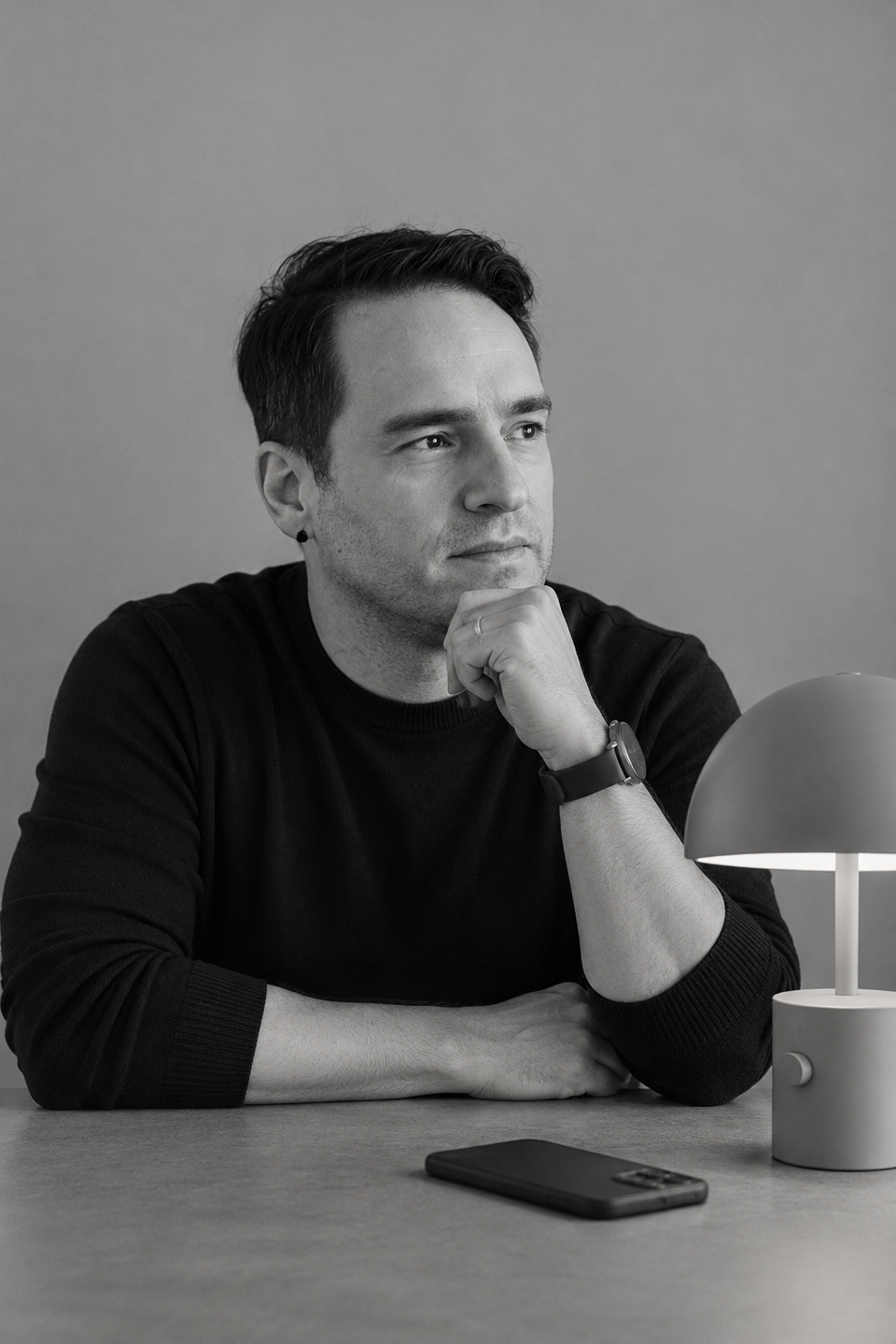
 By Antonio De Rosa, ADR Studio.

Product design for shared use matters to me because everyday objects rarely serve just one person. I believe a product should make sharing clear and safe, without turning one household member into its unpaid administrator.
A speaker sits in a kitchen. A camera passes between friends. A thermostat serves people with different ideas about comfort. Yet their controls, accounts and permissions can still revolve around a single owner.
After more than 30 years in design, I see this as a product problem, not a missing settings screen. Who can use something, what they can change and what they leave behind belong in the design brief.
What does product design for shared use involve?
It means designing for the relationships around an object, not only the relationship between one person and one interface.
The person who buys a product may not install it. The person who installs it may not use it every day. Someone else may clean it, troubleshoot it or eventually pass it on. Those roles should not collapse into one permanent identity.
At ADR Studio, I use a simple distinction: ownership is not the same as access. Paying for a speaker should not be the only route to understanding its controls. Borrowing a camera should not require access to its owner's photo library.
Systems, not styles. Here, that means defining how people move between roles before deciding how the product looks.
Who should control a shared product?
I would start by separating decisions that affect everyone from actions that serve one person in the moment.
Changing a home's heating schedule is different from requesting a temporary temperature adjustment. Removing every saved setting is different from changing the volume. A product should make those differences visible through its behaviour.
This does not require an elaborate hierarchy. It requires a few deliberate choices:
- Everyday use: what anyone nearby can do without signing in.
- Personal preferences: what follows an individual and what stays with the object.
- Shared settings: what affects other people and needs a clear warning.
- Administration: who can grant access, remove it and recover control.
I would also ask what happens when the administrator is unavailable. If a basic task stops because one person's phone is elsewhere, the product has made that person part of its infrastructure. That is a responsibility they may never have agreed to carry.
How should a product handle a handover?
A handover is a design moment. It deserves the same attention as first use.
Consider a camera borrowed for an afternoon. The borrower needs to understand its current mode, whether new images will sync elsewhere and which settings are safe to change. The owner needs a clear way to lend it without exposing personal material.
This is a hypothetical example, but the design questions are concrete. Can the camera enter a temporary session? Can that session end without deleting someone else's work? Can both people understand what remains on the device?
I would look for three qualities: a visible starting state, limited consequences and a clear ending. The object should communicate these through its display, controls or other appropriate signals. A buried account page is not enough.
My work includes globally recognised Apple product concepts and the creation of Socialmatic. That background keeps me interested in the relationship between the physical object and the experience around it. Sharing tests whether those two parts actually agree.
Can shared products protect personal data?
They can be designed to reduce unnecessary exposure, but sharing hardware must not silently mean sharing everything attached to it.
A kitchen display might be useful for a timer and inappropriate for a private message preview. A shared speaker might play music without announcing whose account supplied it. These are different levels of disclosure, not merely different content types.
As an AI advisor today, I see another question becoming important: whose preferences is the product learning? If several people use one object, combining their behaviour can create a profile that represents none of them accurately.
I do not want a product to guess its way through that ambiguity. Where identity matters, it should ask in a proportionate way. Where identity does not matter, it should avoid collecting it.
Personalisation should have a boundary people can understand. That includes a clear way to pause learning, inspect relevant preferences and remove them without damaging everyone else's setup.
How do you test a product used by several people?
I would not test shared use by giving each participant a freshly reset device. That removes the condition we need to understand: someone else was here first.
Instead, I would build a sequence in which each person's actions become part of the next person's starting point. The test should include ordinary interruptions, not only successful journeys.
- Let one person set up the product and establish preferences.
- Ask another person to complete a basic task without coaching.
- Introduce a guest who needs temporary, limited access.
- Make the original administrator unavailable.
- Transfer ownership and check what remains accessible.
I would watch for hesitation, accidental disclosure, unwanted changes and requests for help. I would also ask people to explain who they believe is in control. A working feature is not enough if everyone interprets its rules differently.
My Doctorate does not replace that observation. Neither does experience. Both should help me ask sharper questions, not excuse me from listening to the answers.
Key takeaways.
- Design for owners, regular users and guests as distinct roles.
- Make temporary access useful without exposing personal information.
- Treat handover and ownership transfer as core product journeys.
- Test the state one person leaves for the next.
For me, design drives performance when the product reduces the coordination people must do around it. Shared use is not an edge case to hide in settings. It is part of designing an object that belongs in everyday life.
FAQ.
Is shared use the same as having multiple accounts?
No. Multiple accounts can separate preferences, but shared use also includes guest access, physical controls, visible status and recovery. A person should not always need an account to complete a basic task.
Should every shared product identify its user?
No. Identification should serve a clear purpose. If a task does not need personal data or permissions, asking who is using the product adds friction without necessarily adding value.
When should shared use enter the design process?
During the initial brief. Decisions about storage, controls, connectivity and access can shape whether sharing works. Addressing them after the hardware and software are settled leaves fewer choices and may create avoidable compromises.